

As a parent, giving your child the best possible start in life is always the top priority. But how many of us think seriously about our child’s teeth? Kids dental hygiene is one of the most overlooked parts of child health in India — and it starts much earlier than most parents realise.
The good news? Building strong dental habits early is simple, affordable, and completely in your hands. This guide walks you through everything you need to know — from your baby’s first tooth to your 12-year-old’s growing smile.
Why Kids Dental Hygiene Matters More Than You Think
Many parents believe milk teeth do not matter because they will fall out anyway. This is one of the most common — and most harmful — dental myths.
Milk teeth hold space in the jaw for permanent teeth. When a child loses a milk tooth too early due to decay or infection, the surrounding teeth shift. This creates crowding problems for the permanent teeth that follow.
Poor kids dental hygiene also leads to pain, difficulty eating, trouble sleeping, and even problems with speech development. Tooth pain affects school performance too — a child who cannot concentrate because of a toothache cannot learn properly.
Healthy teeth from an early age build a foundation for a lifetime of good oral health.
Age-wise Dental Care Tips: 0 to 12 Years
Every stage of your child’s development needs a different approach to kids dental hygiene. Every age group needs a slightly different dental approach — here is your stage-by-stage breakdown.
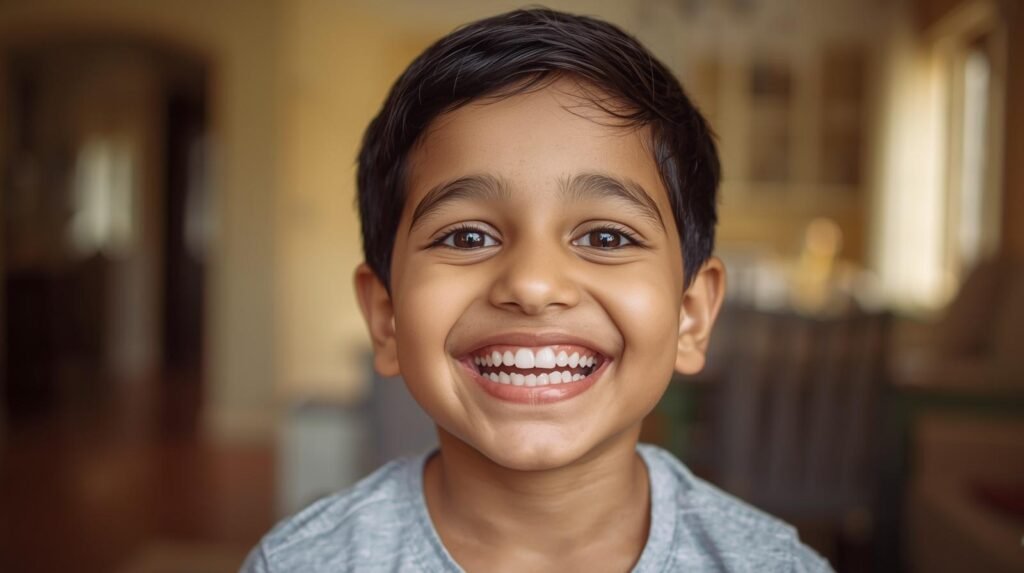
0 to 6 Months — Before the First Tooth
Your baby has no teeth yet — but dental care starts here. After every feed, gently wipe your baby’s gums with a clean, damp cloth. This removes milk residue and harmful bacteria from the gum line. It also prepares your baby for the brushing routine that comes next.
6 to 12 Months — First Tooth Appears
The moment your baby’s first tooth appears, start brushing. Use a soft-bristled infant toothbrush and a tiny smear of fluoride toothpaste — no bigger than a grain of rice. Brush gently twice a day.
Also — never put your baby to sleep with a milk bottle. Milk pools around the teeth while your baby sleeps and causes rapid tooth decay. Dentists call this “baby bottle tooth decay” and it is completely preventable.
This is also the right time to book your child’s first dental visit. The Indian Dental Association recommends a dental check-up within six months of the first tooth appearing, or by the child’s first birthday — whichever comes first.
1 to 3 Years — Toddler Teeth Care
Your toddler’s full set of milk teeth starts coming in during this stage. Brush twice daily with a soft brush and a rice-sized amount of fluoride toothpaste. You do the brushing — toddlers do not have the motor skills to clean their own teeth properly yet.
Keep sugary snacks and juices to a minimum. Sugar feeds the bacteria in your child’s mouth, producing acid that attacks tooth enamel. Healthy teeth habits for children start at the dining table, not just the bathroom sink.
3 to 6 Years — Building Independence
At this age, children love doing things themselves. Encourage them to brush — but always supervise and finish the job yourself. Use a pea-sized amount of toothpaste. Teach them to spit, not swallow.
Make brushing fun. Use a two-minute sand timer, play their favourite song, or use a colourful kids toothbrush they chose themselves. Positive association with brushing builds a lifelong habit.
Begin flossing the moment any two teeth start sitting close together. This clears food trapped between teeth that a toothbrush cannot reach.
6 to 9 Years — Losing Milk Teeth
Permanent teeth start arriving at this stage. This is a critical window for kids dental hygiene because permanent teeth need to last a lifetime.
Some children develop deep grooves in their back teeth that trap food and bacteria easily. Ask your dentist about dental sealants — a thin protective coating applied to the chewing surfaces of back teeth. Sealants dramatically reduce the risk of cavities in children.
Keep up the twice-daily brushing, daily flossing, and a dental visit every six months without fail.
9 to 12 Years — Pre-Teen Oral Health
At this stage, children can brush independently — but they still need parental oversight. Pre-teens often get lazy about brushing, especially at night. Nighttime brushing is non-negotiable. Saliva production drops during sleep, leaving teeth more vulnerable to acid and bacteria.
This is also the age when orthodontic problems — crowding, spacing, bite issues — become visible. Schedule an orthodontic evaluation so your dentist can spot problems early and plan treatment if needed.
Gum health in children also becomes more important here. If your child’s gums bleed during brushing, do not ignore it. This is an early sign of gum disease and needs a dental check-up immediately.
Kids Dental Hygiene: What Parents Should DO

- Start cleaning your baby’s gums before the first tooth appears — a clean damp cloth after every feed removes harmful bacteria effectively.
- Brush your child’s teeth twice daily using a soft-bristled toothbrush and the right amount of fluoride toothpaste for their age.
- Visit your dentist every six months — regular check-ups catch small problems before they turn into painful, expensive ones.
- Make brushing a fun daily routine — play a favourite song, use a colourful toothbrush, or set a two-minute timer to keep your child engaged.
- Limit sugary snacks and fizzy drinks as much as possible — sugar is the number one cause of tooth decay in children.
- Always use an age-appropriate toothbrush and toothpaste — adult products are too harsh for a young child’s teeth and gums.
- Ask your dentist about dental sealants for your child’s back teeth — this thin protective coating dramatically reduces cavity risk.
- Encourage your child to drink fluoridated water where available — fluoride strengthens developing tooth enamel naturally.
Kids Dental Hygiene: What Parents Should NOT DO
- Never wait until your child complains of tooth pain to visit a dentist — by the time pain appears, the problem has already progressed.
- Never share spoons, cups, or utensils with your child — cavity-causing bacteria transfer easily from an adult’s mouth to a child’s.
- Never put your child to bed with a milk or juice bottle — liquid pools around the teeth during sleep and causes rapid decay.
- Never let your child brush alone before age 7 — young children lack the motor skills to clean their teeth properly without help.
- Never ignore bleeding gums — this is an early warning sign of gum disease and needs immediate dental attention.
- Never use adult toothpaste for children under 6 — the fluoride concentration is too strong for young children.
- Never skip flossing once your child’s teeth begin touching — a toothbrush simply cannot reach the tight spaces between teeth.
- Never reward your child with sweets for good behaviour — this builds an unhealthy connection between sugar and positive reinforcement.
Foods That Protect and Foods That Damage Your Child’s Teeth
What your child eats directly affects their oral health. Some foods strengthen teeth. Others destroy enamel quickly.
Tooth-friendly foods: Milk, cheese, yoghurt, carrots, apples, leafy greens, eggs, and plain water all support strong teeth and healthy gums. Cheese works actively to neutralise the acid that builds up in your child’s mouth after eating.
Foods to limit: Biscuits, chocolates, chips, fizzy drinks, fruit juices, sticky sweets, and white bread all feed cavity-causing bacteria. It is not just about what your child eats — it is also about how often. Frequent snacking throughout the day gives bacteria a constant food supply to produce tooth-damaging acid.
The single best drink for your child’s teeth is plain water. Encourage it after every snack and meal.
How to Handle Common Kids Dental Problems
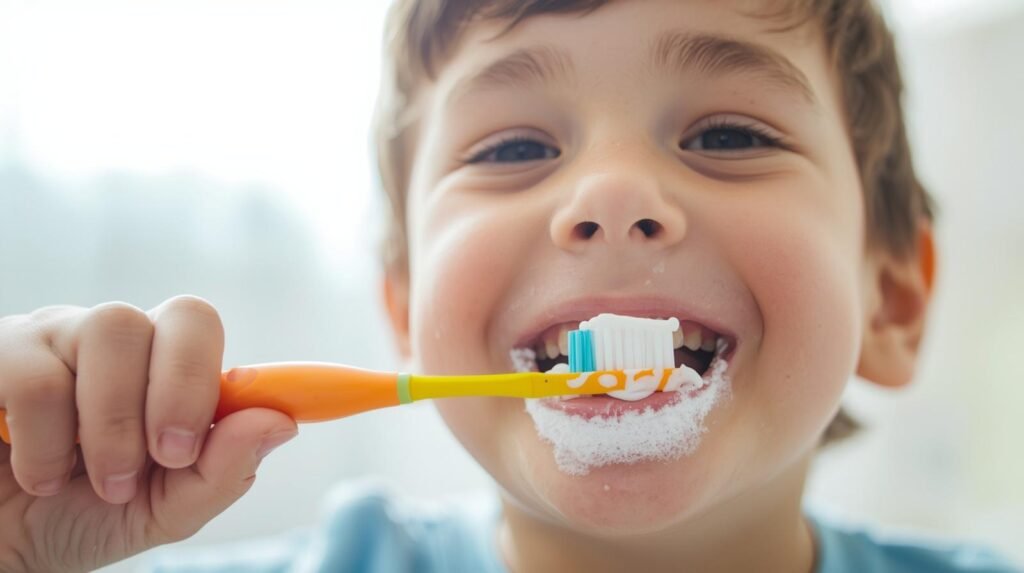
Tooth Pain: Never ignore a toothache in a child. It usually means decay has reached the inner layer of the tooth. Visit your dentist immediately — early treatment prevents extraction.
Thumb Sucking: Most children stop on their own by age 3 to 4. If the habit continues beyond age 5, it can affect how the teeth and jaw develop. Talk to your dentist for gentle intervention strategies.
Teeth Grinding (Bruxism): Some children unconsciously grind their teeth during sleep — a condition dentists call bruxism. This wears down enamel over time. Your dentist can assess the severity and recommend a night guard if needed.
Knocked-Out Tooth: If your child knocks out a permanent tooth, pick it up by the crown (not the root), rinse gently with milk or saline, and get to your dentist within 30 minutes. Speed saves the tooth.
Frequently Asked Questions
1. When should my child first visit a dentist?
Schedule your child’s first dental visit before they turn one, or six months after their first tooth arrives — whichever happens earlier. Early visits build comfort with the dental environment and catch problems before they grow.
2. Which toothpaste is safe for my child?
Use fluoride toothpaste from the first tooth.A smear no bigger than a grain of rice works perfectly until age 3 — then move up to a pea-sized amount as they grow. Choose a toothpaste made for children and avoid adult formulas for young kids.
3. Is it normal for children’s gums to bleed?
No. Bleeding gums are not normal — they signal early gum disease caused by plaque build-up. Improve brushing technique and visit your dentist if bleeding continues.
4. My child panics at the thought of visiting the dentist — what can I do?
Start dental visits early and keep them positive. Never use the dentist as a threat. Choose a child-friendly dental clinic where the team is experienced with young patients.
5. Do milk teeth really need fillings?
Yes. An untreated cavity in a milk tooth causes pain, infection, and early tooth loss — which affects the position of permanent teeth. Always treat decay, regardless of whether the tooth is permanent or not.
Final Words for Every Parent
Kids dental hygiene is not a complicated job. It takes two minutes in the morning, two minutes at night, and a dental visit every six months. That is all it takes to give your child a healthy, pain-free smile through childhood and beyond.
Start early. Stay consistent. And when in doubt — always ask your dentist.
At Indus Dental Care we love working with children and making dental visits a positive experience for the whole family. Our team is trained to handle young patients with patience, warmth, and gentle care.
Book your child’s dental check-up today. Because every child deserves a healthy, confident smile that lasts a lifetime.