
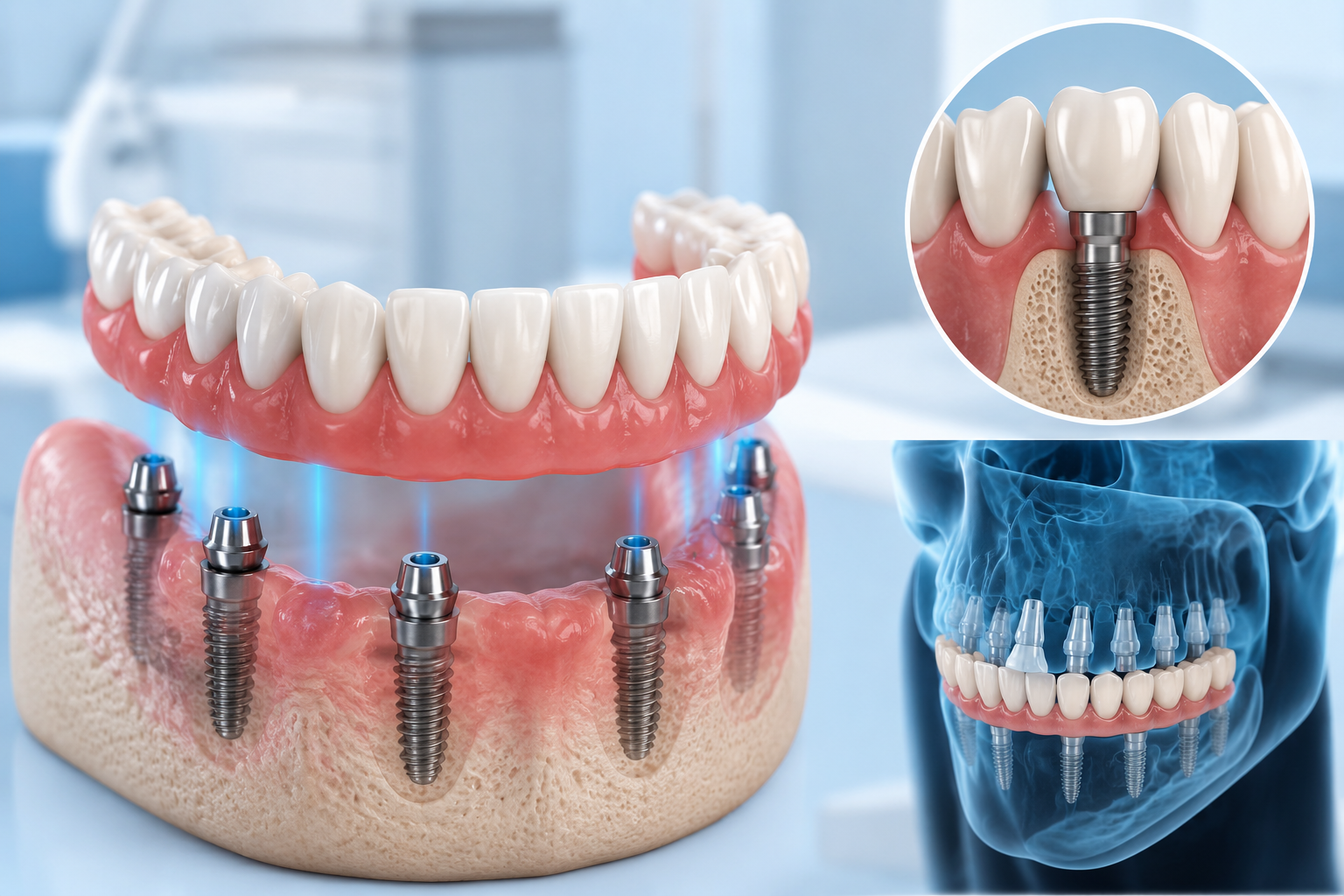
Losing several or all of your teeth can make everyday activities such as eating, speaking, and smiling difficult. Traditional dentures can help replace missing teeth, but some patients want a more stable and long-term solution. Full mouth implants in coimbatore can be an option for people who have lost most or all of their teeth.
If you are searching for a full mouth dental implant, understanding the treatment before making a decision is important. The procedure involves careful planning, dental scans, implant placement, healing, and the final fixed teeth. The exact treatment plan differs from patient to patient.
This complete 2026 guide explains what full mouth dental implants are, who may need them, the procedure, recovery time, benefits, possible risks, and factors that affect the cost.
What Are Full Mouth Dental Implants?
Full mouth dental implants are a treatment option used to replace many missing or severely damaged teeth with implant-supported teeth.
A dental implant acts as an artificial tooth root. It is placed into the jawbone and allowed to integrate with the surrounding bone. After healing, a custom-made dental restoration is attached to the implants.
Full-mouth treatment does not always mean placing one implant for every missing tooth. Depending on the patient’s condition, dentists may use several strategically positioned implants to support a fixed bridge or full-arch restoration.
The number of implants and the type of replacement teeth depend on factors such as:
- Jawbone condition
- Number of missing teeth
- Gum health
- Existing teeth
- Bite and jaw relationship
- Overall oral health
- Type of final restoration
- Patient’s treatment goals
A proper examination is therefore essential before choosing a full-mouth implant treatment.
Who May Need Full Mouth Dental Implants?
Full-mouth implants may be considered for patients who have lost most or all of their teeth or have teeth that cannot be predictably restored.
Common situations include:
1. Extensive Tooth Loss
Patients who have lost many teeth may require a comprehensive replacement rather than individual tooth treatments.
2. Severely Damaged Teeth
Teeth affected by extensive decay, fractures, or other problems may sometimes have a poor long-term prognosis.
3. Difficulty Using Dentures
Some people find removable dentures uncomfortable or unstable, particularly while eating or speaking. Implant-supported teeth can provide greater stability.
4. Advanced Dental Problems
Severe gum disease and long-term tooth loss can affect the supporting structures of the mouth. Before implants are placed, the dentist must assess and manage active dental or gum problems.
5. Desire for a Fixed Tooth Replacement
Some patients prefer a fixed restoration instead of a removable denture. However, whether this is possible depends on the individual’s bone, gums, health, and treatment requirements.
Full Mouth Dental Implant Procedure: Step-by-Step
The full-mouth implant process usually involves several stages. Your dentist will create a personalized treatment plan after examining your mouth and reviewing diagnostic images.
Step 1: Initial Dental Examination
The first appointment involves a detailed examination of your teeth, gums, jaw, bite, and overall oral condition.
The dentist may ask about:
- Previous dental treatments
- Tooth loss
- Gum problems
- Medical history
- Current medications
- Previous implant treatments
- Your expectations from treatment
This assessment helps determine whether implants are suitable for you.
Step 2: Digital Imaging and Treatment Planning
Dental imaging helps the dentist understand the condition of the jawbone and identify important anatomical structures.
Depending on the case, X-rays or 3D imaging such as CBCT may be recommended.
The dentist uses the information to plan implant positions and determine the appropriate restoration.
Modern implant treatment focuses heavily on accurate diagnosis and individualized planning. Indus Dental Care also describes the use of digital imaging and personalized implant treatment planning as part of its approach to implant care.
Step 3: Treating Existing Dental Problems
Before implant placement, existing oral health problems may need treatment.
For example, the dentist may recommend:
- Gum disease treatment
- Tooth extraction
- Infection control
- Bone grafting
- Other restorative treatment
The goal is to create a healthy foundation for implant treatment.
Step 4: Implant Placement
During implant surgery, the dentist places the implant fixtures into carefully planned areas of the jawbone.
The number of implants depends on the planned restoration and the patient’s individual anatomy.
Local anaesthesia is commonly used to keep the procedure comfortable. In selected cases, additional sedation options may also be considered.
Step 5: Healing and Osseointegration
After implant placement, the jawbone needs time to heal around the implants.
This biological process is called osseointegration. During this stage, the implant becomes integrated with the surrounding bone.
The healing period varies between patients and depends on factors such as bone quality, implant location, surgical technique, and whether additional procedures were required.
Step 6: Temporary Teeth When Suitable
Some treatment plans may include temporary teeth during the healing period.
Immediate or early loading is not suitable for every patient. Your dentist will decide whether temporary teeth can be provided based on implant stability, bone condition, and the planned treatment.
Step 7: Final Teeth Placement
Once healing is satisfactory, the dentist proceeds with the final restoration.
The replacement teeth are designed according to factors such as:
- Facial appearance
- Tooth shape
- Tooth colour
- Bite
- Speech
- Jaw position
- Patient preference
The goal is to create a functional and natural-looking smile.
Full Mouth Implant Cost in Coimbatore
One of the most common questions patients ask is: “How much does a full mouth implant cost in Coimbatore?”
There is no single price that applies to every patient.
Full-mouth implant treatment is a customized procedure, so the final cost depends on the treatment plan.
Important cost factors include:
Number of Implants
The number of implants required can affect the total treatment cost. Full-arch treatment does not necessarily require one implant for every missing tooth.
Implant Brand and Type
Different implant systems and components have different costs. The dentist may recommend an implant system based on clinical requirements and treatment planning.
Type of Final Teeth
The final restoration may use different materials and designs. The choice can affect the overall cost.
Bone Grafting
Patients with insufficient bone may require bone augmentation before or during implant treatment. This can add to both treatment time and cost.
Tooth Extraction
If damaged or infected teeth need to be removed, extraction may form part of the overall treatment plan.
Diagnostic Tests
X-rays, 3D scans, digital impressions, and other diagnostic procedures may contribute to the treatment cost.
Additional Dental Treatment
Gum treatment, infection control, or other procedures may be necessary before implant placement.
For this reason, patients should request an itemized treatment estimate after examination rather than choosing a clinic based only on an advertised starting price.
Current published Indian estimates vary widely, with some 2026 sources reporting full-mouth treatment costs from a few lakh rupees to substantially higher amounts depending on the complexity and restoration selected.
For an accurate full mouth implant in Coimbatore cost estimate, an in-person examination and treatment planning are essential.
Full Mouth Dental Implant Recovery
Recovery is different for every patient.
After implant surgery, some swelling, mild discomfort, bruising, or sensitivity may occur. These symptoms generally improve as the tissues heal.
Your dentist will provide specific post-operative instructions. These may include:
- Follow the prescribed medication instructions.
- Keep the surgical area clean as advised.
- Avoid smoking during healing.
- Choose foods recommended by your dentist.
- Avoid putting unnecessary pressure on the surgical area.
- Attend scheduled follow-up appointments.
- Maintain good oral hygiene around the implant area.
Do not compare your recovery with another patient’s experience. A patient who receives bone grafting or multiple procedures may require a different healing period than someone who undergoes a simpler treatment.
How Long Does Full Mouth Implant Treatment Take?
The total treatment timeline depends on your dental condition.
Some patients may qualify for faster implant protocols, while others require a staged approach.
Treatment may take longer when the patient needs:
- Bone grafting
- Gum treatment
- Multiple extractions
- Healing before implant placement
- Additional restorative procedures
Therefore, it is better to think of full-mouth implant treatment as a planned treatment journey, rather than a single appointment.
Your dentist can provide a more accurate timeline after evaluating your scans and oral health.
Benefits of Full Mouth Dental Implants
Full-mouth implants can provide several functional and lifestyle benefits when they are suitable for the patient.
1. Better Stability
Implant-supported teeth are anchored to the jaw, which can provide more stability than conventional removable dentures.
2. Improved Chewing Function
Replacing missing teeth can help restore chewing ability. However, patients should follow their dentist’s instructions during the healing period.
3. Natural-Looking Appearance
Modern dental restorations can be designed to match the patient’s facial features, existing teeth, and smile.
4. Improved Speech
Missing teeth or loose dentures can affect speech. A stable tooth replacement may help improve speech for some patients.
5. No Need for Traditional Denture Adhesive
Fixed implant-supported restorations do not rely on conventional denture adhesive for stability.
6. Support for a Full Smile
Full-mouth treatment can restore the appearance of a complete dental arch and may help patients feel more confident while smiling.
Dental implants are widely used as a tooth-replacement option, but they are not completely free of complications. Proper planning, placement, maintenance, and follow-up remain important for long-term results.
Are Full Mouth Dental Implants Permanent?
Patients often hear the word “permanent” when researching dental implants.
A better way to understand this is that implants are designed as a long-term tooth replacement solution, but they still require proper care and professional maintenance.
The implant itself and the prosthetic teeth can experience different types of wear or complications over time.
Good oral hygiene, regular dental examinations, professional cleaning when recommended, and following your dentist’s instructions can help protect the implants and surrounding tissues.
Implant-related inflammation can affect the tissues around an implant, so regular monitoring is important.
How to Care for Full Mouth Dental Implants
Good maintenance is important after implant treatment.
Follow these basic habits:
Brush Regularly
Clean your teeth and implant-supported restoration according to your dentist’s instructions.
Clean Between the Teeth
Depending on your restoration, your dentist may recommend floss, interdental brushes, water flossers, or other cleaning methods.
Attend Dental Check-Ups
Regular examinations help identify problems early.
Avoid Tobacco
Smoking can negatively affect oral health and may interfere with healing and implant maintenance.
Follow Professional Cleaning Recommendations
Your dentist or dental hygienist can recommend a cleaning schedule based on your oral health.
Why Choose Indus Dental Care for Full Mouth Implant Treatment?
Choosing the right dental clinic is an important part of implant treatment.
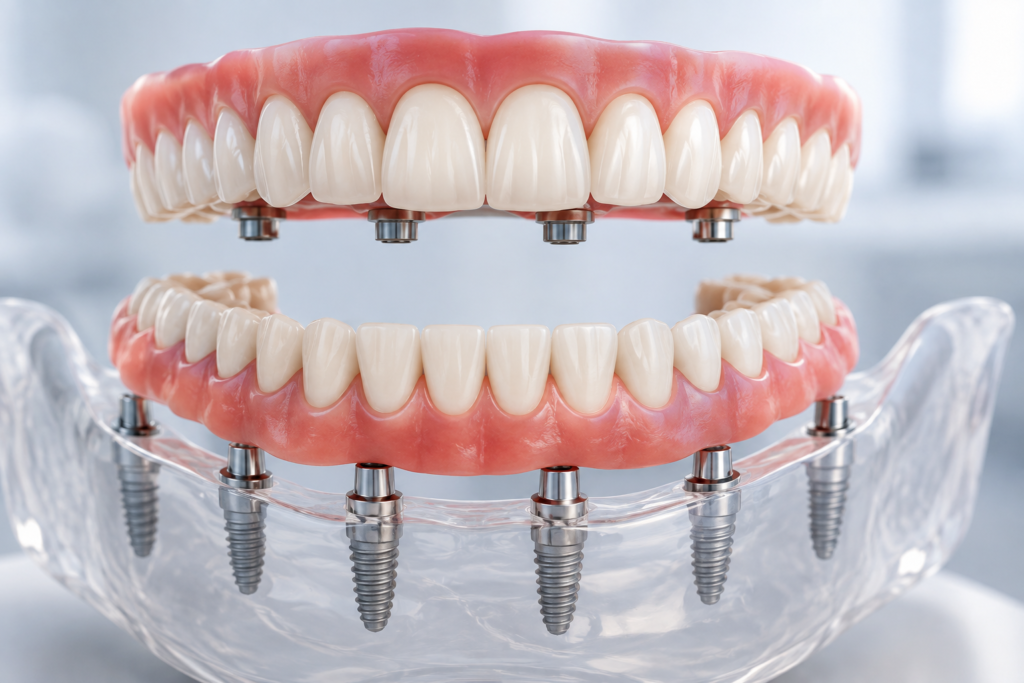
Indus Dental Care focuses on personalized dental care and provides implant treatment as part of its advanced restorative dentistry services. The clinic’s website highlights modern diagnostic facilities, individualized treatment planning, and a focus on patient comfort.
For patients considering a full mouth implant in Coimbatore, a proper consultation can help determine:
- Whether implants are suitable
- How many implants may be required
- Whether bone grafting is necessary
- Which restoration is appropriate
- Expected treatment duration
- Estimated treatment cost
- Recovery and maintenance requirements
Instead of selecting a treatment based only on price, consider the dentist’s experience, diagnostic facilities, treatment planning, implant system, restoration quality, hygiene standards, and aftercare.
Frequently Asked Questions
1. Is full mouth dental implant treatment painful?
Implant surgery is performed with anaesthesia to control discomfort during the procedure. Some soreness, swelling, or discomfort can occur after surgery. Your dentist will provide appropriate post-operative instructions.
2. How many implants are needed for a full mouth?
There is no fixed number for every patient. The number depends on the treatment design, bone condition, jaw anatomy, and type of restoration.
3. Can I get teeth on the same day?
Some patients may qualify for immediate or early loading protocols. However, this is not suitable for everyone. Your dentist must evaluate implant stability and other clinical factors before recommending it.
4. What is the full mouth implant cost in Coimbatore?
The cost varies according to the number and type of implants, restoration material, diagnostic procedures, bone condition, and additional treatments. A personalized examination is required for an accurate estimate.
5. How long does recovery take?
Initial healing occurs over the first few weeks, but complete integration of the implant with the bone can take longer. The exact timeline depends on the individual treatment plan.
6. Can older adults get full mouth implants?
Age alone does not automatically rule out dental implants. However, the dentist must evaluate oral health, bone condition, medical history, medications, and ability to maintain proper oral hygiene.
7. Are full mouth implants better than dentures?
Neither option is automatically better for everyone. Implants can offer greater stability, but they require surgery, adequate planning, maintenance, and a higher initial investment. Dentures may be suitable for patients who prefer a removable and generally less expensive option.
Final Thoughts
Full mouth dental implants can be an important option for people who have lost many or all of their teeth. They can help restore chewing function, smile appearance, and confidence while providing a stable alternative to conventional dentures.
However, full-mouth implant treatment is a major dental procedure. The right approach depends on your jawbone, gums, existing teeth, overall health, expectations, and budget.
If you are considering a full mouth implant in Coimbatore, the best first step is a detailed consultation. Your dentist can examine your oral health, review appropriate dental scans, explain your treatment options, provide an expected timeline, and prepare a personalized cost estimate.
At Indus Dental Care, patients can discuss their individual dental needs and explore suitable implant-based treatment options with a personalized treatment plan.
Looking for full mouth dental implants in Coimbatore? Book a consultation with Indus Dental Care to understand your treatment options and get a personalized treatment plan.